


While total talent integration may sound fantastic at conferences, most organizations are still figuring out how to put their words into practice. I have encountered leaders who, in their sleep, can recite the advantages of combining permanent hire and extended workforce activities, as well as others whose eyes glaze over the technical terms. However, almost everyone believes that using different playbooks to manage internal and external talent is expensive. Occasionally, chances are lost, compliance deteriorates, and peace of mind is always impacted. This need not be the case. Businesses can enhance procedures and decision-making by utilizing automation and artificial intelligence. When making decisions about strategy and workforce planning, stakeholders can be brought on board. The positive aspect? Transparency regarding the setbacks is becoming more and more common. That indicates that the industry is maturing.
Is holistic talent management becoming more popular?
Building a whole talent capability still requires a lot of work, according to our 2026 survey of more than 100 workforce decision makers at the CWS Europe Summit. Responses to a question about how well they were integrating the extended workforce and permanent employment procedures were not entirely consistent.
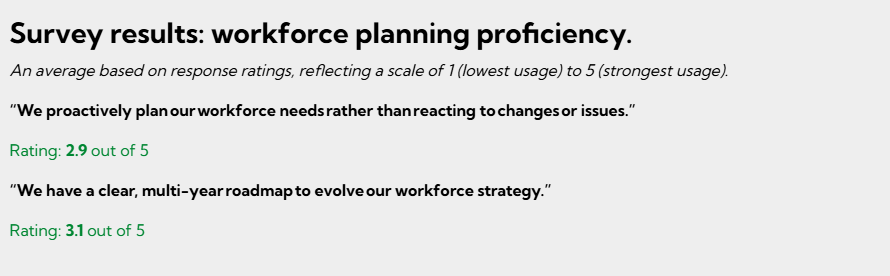
Keys to improvement: aligning permanent and extended workforce processes.
Gaps in coordination between permanent hire and extended workforce stakeholders result in parallel processes, duplicated effort, and missed opportunities to leverage the full workforce. Managing in silos is simply too comfortable (until it isn’t).
These findings reflect what we see every day in conversations with procurement, HR, and talent leaders. They recognise that workforce decisions cannot be made in silos. However, many still lack the core components of a sustainable integrated workforce strategy. The path forward starts by building on the fundamentals.
Embrace three priorities to evolve your processes.
The companies making headway in their integrated workforce capabilities stand out for their commitment and investment in key fundamentals: improving visibility across the workforce, establishing seamless governance, and capturing value and improvement.
Workforce visibility: Integration starts with a comprehensive, real-time view across all workforce categories, including contingent workers, independent contractors, consultants, and statement-of-work engagements.
This requirement may seem daunting, but answers are within reach. For example, many clients are pleasantly surprised to learn that a headcount tracking dashboard can be established relatively quickly for an extended workforce. Our proprietary Kelly® technology ecosystem empowers data flexibility to deliver on such demands.
Governance: Build control and transparency into workforce processes. Effective integrated talent functions are built on technology that embeds governance into daily recruitment and resource workflows. This approach removes confusion and creates accountability without bogging down activity.
Technology-enabled governance helps embed workforce strategy directly into operational workflows. Modern workforce management platforms help standardise hiring and engagement, improve compliance, boost visibility into spend and suppliers, improve decision-making, and reduce misclassification risks.
Value creation: Move beyond passive administration of processes. More companies look to their workforce leaders as a critical element of business strategy, and those leaders are expected to help the business respond to changing market conditions. That’s the root of value creation.
A value-driven approach focuses on outcomes, not just processes — unlike the administrative approach common among many strategies and programmes. To begin, work with your organisation to assess how well you are tracking on strategic demands. This includes an evaluation of:
- Actionable workforce intelligence
- Data-driven decision support
- Continuous process improvement
- Enhanced user experience for hiring managers and workers
- Innovation that drives measurable outcomes
Establish where the gaps are in meeting these needs, and you will have a path for improving how your integrated workforce function operates and supports the business. Use data to identify opportunities, improve adoption, refine processes, and drive better business outcomes over time.
Success builds on progress, not perfection.
The challenges to integration are solvable. Start with visibility, layer in governance, and build an engine of continuous value. When in doubt, look for partners who’ve already crossed a few of those bridges.
Every step you take to build a connected workforce positions you for greater agility and better business outcomes. Progress may be incremental, but its impact will echo far beyond your org chart.